Seasons & Sourcing
When and Where to Buy Them Ripe
A fruit eaten in season, close to where it grows, can taste like a different species from the tired import. Here's when to look, and where.
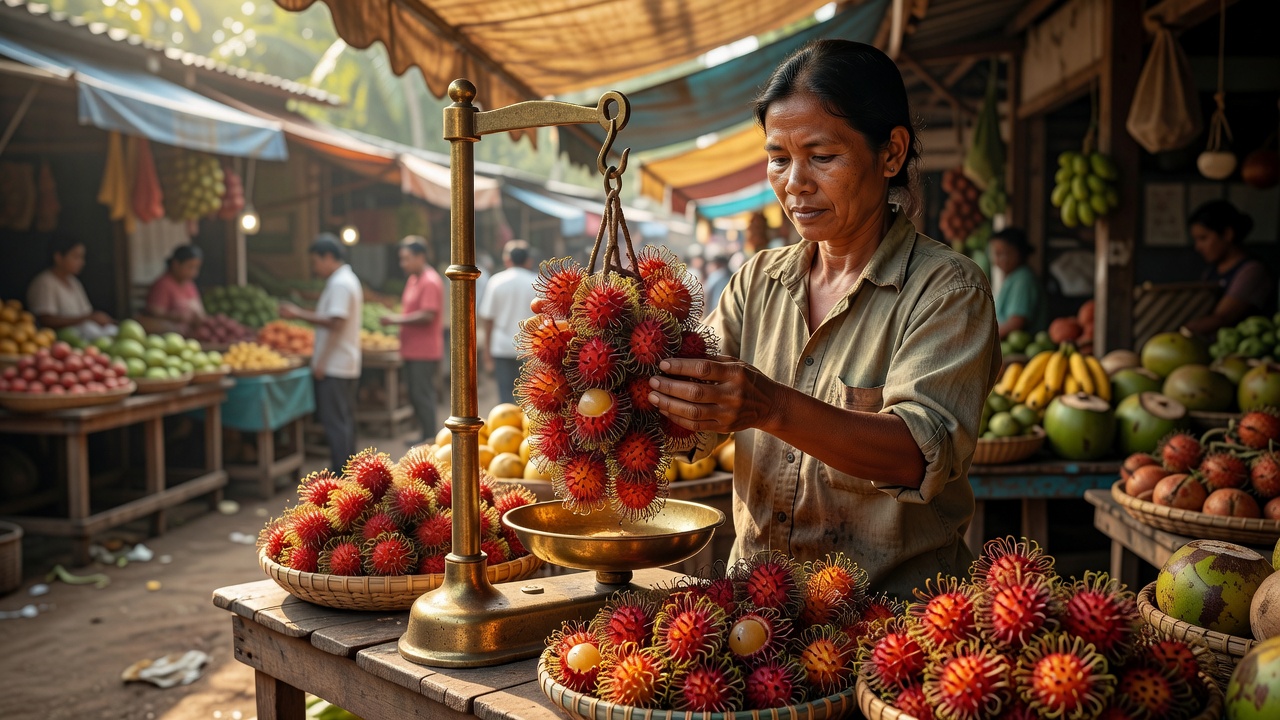
Why season matters more for exotic fruit
Apples store for months. Most tropical fruits don't. Mangosteen dries out within a couple of weeks of picking; rambutan's hairs blacken in days; jabuticaba starts fermenting almost at once. So the gap between peak-season fruit near the farm and off-season fruit after a long journey is enormous. Buying in season is the single biggest thing you can do to taste these foods at their best.
The chart below lists the main harvest window in the leading producing region. Many fruits have smaller second crops, and growers in other countries fill gaps, so treat these as the months when quality and price are both at their best.
Season chart
| Fruit or ingredient | Peak window and region |
|---|---|
| Mangosteen | May–August, eastern Thailand (Chanthaburi, Rayong) |
| Rambutan | May–September, Thailand; June–August, Malaysia |
| Durian | April–June, eastern Thailand; June–August, peninsular Malaysia |
| Salak | Most of the year, Java and Bali, Indonesia |
| Jackfruit | March–June, Kerala and southern India |
| Dragon fruit | May–October, Binh Thuan, Vietnam |
| Cherimoya | October–May, Costa Tropical, southern Spain |
| Finger lime | January–May, New South Wales and Queensland, Australia |
| Buddha's hand | November–February, California and southern China |
| Surströmming | Traditional premiere in late August, northern Sweden |
Markets worth the trip
Or Tor Kor Market, Bangkok
Near Chatuchak, known for top-grade fruit. Vendors cut durian to order and will happily pick you a ripe mangosteen.
Chow Kit Market, Kuala Lumpur
Loud, crowded and excellent for rambutan, salak and durian in season, plus jackfruit sold by the bulb.
Ben Thanh Market, Ho Chi Minh City
Tourist-heavy but reliable for dragon fruit, soursop and star apple. Compare prices across a few stalls.
Mercado de La Merced, Mexico City
One of the largest markets in the Americas: mamey, black sapote, pitaya and chicozapote in quantity.
La Boqueria, Barcelona
Look for Spanish cherimoya in winter, plus imported tropical fruit at a premium.
Borough Market, London
Specialist greengrocers bring in finger limes, Buddha's hand and seasonal citrus oddities.
Buying away from the source
If you live far from the tropics, Asian, Latin American and African grocers are your friends. They often stock better fruit than mainstream supermarkets because their customers know exactly what good mangosteen or soursop should look like. Ask when deliveries arrive and shop that day.
Frozen is not a compromise for every fruit. Durian pulp, jackfruit bulbs and soursop are frozen at peak ripeness in Thailand, Malaysia and Vietnam and keep well. Canned young jackfruit is the standard for savoury cooking. Fresh is essential, though, for mangosteen, rambutan and finger lime, where texture is half the pleasure. For ripeness checks on each, see the Fruit Atlas.
A final word on travel: many countries restrict bringing fresh fruit across borders to protect crops from pests. Eat it where you find it, and bring home the memory and a recipe instead.