Fruit Atlas
Rinds, Seeds and the Flesh Between
Six fruits that stop people at the stall. For each one: where it grows, when it's best, what it honestly tastes like, and the single check that tells you whether to buy.
Why we lead with taste
Most fruit writing opens with botany and ends with a vague promise of "sweet and exotic". That doesn't help you at a market in Bangkok, Kuala Lumpur or a well-stocked shop in east London when one mangosteen costs as much as a bag of apples. What you need to know is whether the thing in your hand is ripe, what it will taste like, and what to do with it once you get home.
So each entry below follows the same ledger format: origin, season and taste on a single strip, then a short tasting note and a ripeness check. The seasons given are for the main producing country; imported fruit can turn up almost any month, but it's rarely at its peak outside these windows. For the full chart, see Seasons & Sourcing.
The six entries
Mangosteen (Garcinia mangostana)
Often called the queen of fruits, and it earns the title. The white segments melt rather than chew, with a sharp edge that keeps the sweetness from cloying. Larger segments may hold a seed; spit it out.
Ripeness check: press gently. A slight give means good; a rind as hard as wood means the fruit has dried inside. Avoid yellow sap on the skin, a sign of stress or damage.
Rambutan (Nephelium lappaceum)
A cousin of lychee and longan, with a firmer, slightly rubbery bite and a faintly green flavour. The best ones are dripping and floral; poor ones are sour and stick stubbornly to the seed.
Ripeness check: look at the hairs. Fresh rambutan has bright red shells and lively hairs; black, wilted hairs mean the fruit is past its best, even if the inside is still edible.
Durian (Durio zibethinus)
The naturalist Alfred Russel Wallace described it as "a rich custard highly flavoured with almonds". He was being polite about the smell. Malaysian Musang King is bitter-sweet and dense; Thai Monthong is milder and a better first try.
Ripeness check: sniff the stem end. A strong, sweet aroma means ready; no smell means underripe. Shake it: a faint knock of loose pods inside is a good sign.
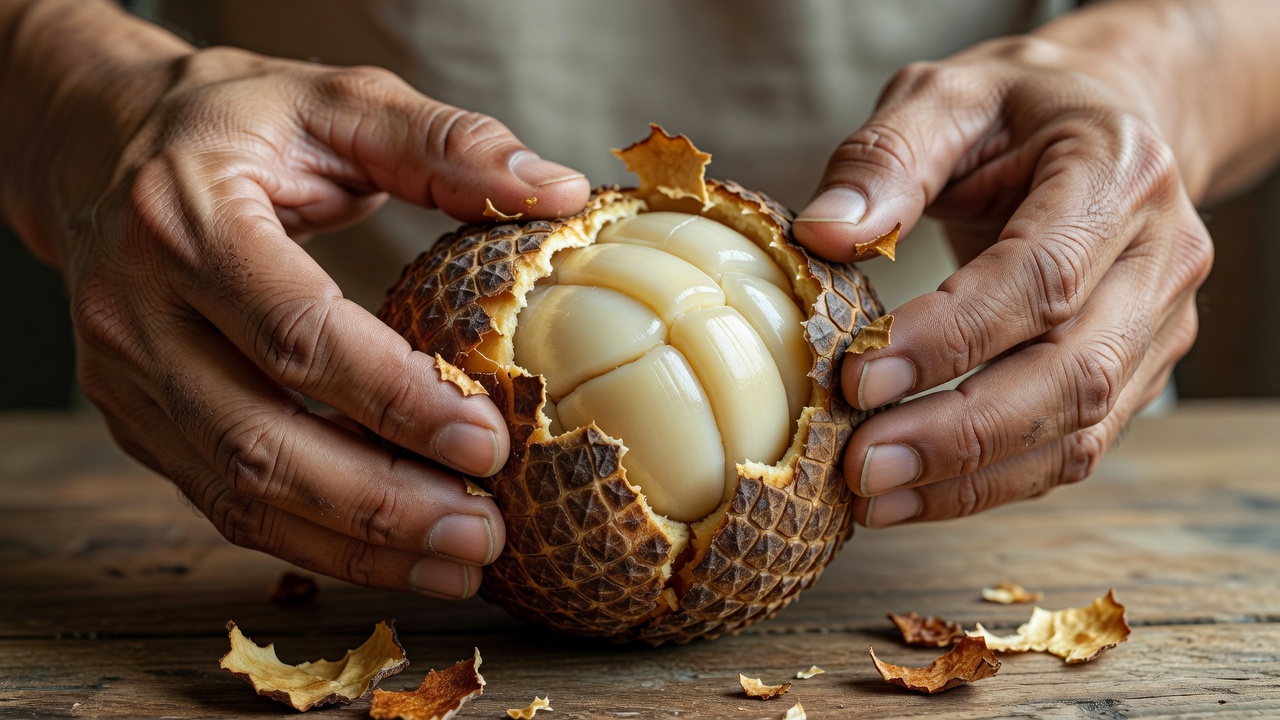
Salak (Salacca zalacca)
Called snake fruit for its scaly skin. The lobes crunch like a firm apple and taste of pineapple and banana, with a dry, tannic finish. Bali's salak gula pasir is the sweetest variety and worth seeking out.
Ripeness check: the skin should be glossy and tight; a fruity smell at the tip is ideal. Dull, wrinkled skin means dry, chalky flesh.
Jackfruit (Artocarpus heterophyllus)
The largest tree fruit, sometimes over 30 kg. Ripe bulbs are chewy, golden and taste like tropical sweets. Unripe jackfruit is a different ingredient altogether: neutral and stringy, ideal for curries and "pulled" dishes.
Ripeness check: ripe ones smell sweet, yield to a press and turn from green to yellow-brown. Oil your knife and hands before cutting; the latex is fiercely sticky.
Cherimoya (Annona cherimola)
Mark Twain called it "deliciousness itself". Scoop the soft white flesh with a spoon and discard the black seeds, which are toxic if crushed. Spain's Costa Tropical around Almuñécar is Europe's main source.
Ripeness check: buy firm and wait. It's ready when it gives like a ripe avocado and the green skin darkens slightly. Fully brown means overripe.
Reading any fruit at the stall
Beyond these six, three habits will carry you a long way. First, use your nose. Almost every tropical fruit announces ripeness through smell before colour; if it smells of nothing, it will probably taste of not much. Second, weigh it in your hand. Fruit that feels heavy for its size holds more juice. Third, ask the vendor which ones they would eat today. In our experience, people who sell fruit for a living rarely lie about this, partly because they want you back next week.
Finally, buy one before you buy ten. Taste is personal. A friend of ours adores durian and cannot abide cherimoya. Learn which textures you like, then use the Recipe Lab to cook with them.